Above,
An obsidian sky,
Stars cold and steady.
Below,
Not a breeze stirs,
Not a single insect calls.
Tuesday, July 16, 2013


Monday, July 15, 2013
My Life's Theme Songs - age 14 to present
These are the theme songs of my life, arranged in chronological order by approximate age. Some day I may explain each one - the reasons are not as apparent as you might think.
Age 14 - The Joker, The Steve Miller Band
Age 18 - I'll Be Home, Randy Newman
Age 22 - She Blinded Me with Science, Thomas Dolby
Age 23 - The Coldest Night of the Year, Bruce Cockburn
Age 24 - The Boys of Summer, Don Henley
Age 25 - Holding Back the Years, Simply Red
Age 29 - Following, The Bangles
Age 30 - Manic Monday, The Bangles
Age 35 - You Were Mine, Dixie Chicks
Age 40 - Lord of the Starfields, Bruce Cockburn
Age 45 - All The Ways I Want You, Bruce Cockburn
Age 46 - Closer to Believing, Greg Lake (Emerson, Lake & Palmer)
Age 46 - Lend Your Love to Me Tonight, Greg Lake (ELP)
Age 47 - Someone I Used to Love, Bruce Cockburn
Age 49 - Overkill (Acoustic), Colin Hay
Age 50 - Deepest Part of Me, Dougie MacLean
Age 51 - Beautiful World, Colin Hay
Age 52 - Waiting for My Real Life to Begin, Colin Hay
Age 14 - The Joker, The Steve Miller Band
Age 18 - I'll Be Home, Randy Newman
Age 22 - She Blinded Me with Science, Thomas Dolby
Age 23 - The Coldest Night of the Year, Bruce Cockburn
Age 24 - The Boys of Summer, Don Henley
Age 25 - Holding Back the Years, Simply Red
Age 29 - Following, The Bangles
Age 30 - Manic Monday, The Bangles
Age 35 - You Were Mine, Dixie Chicks
Age 40 - Lord of the Starfields, Bruce Cockburn
Age 45 - All The Ways I Want You, Bruce Cockburn
Age 46 - Closer to Believing, Greg Lake (Emerson, Lake & Palmer)
Age 46 - Lend Your Love to Me Tonight, Greg Lake (ELP)
Age 47 - Someone I Used to Love, Bruce Cockburn
Age 49 - Overkill (Acoustic), Colin Hay
Age 50 - Deepest Part of Me, Dougie MacLean
Age 51 - Beautiful World, Colin Hay
Age 52 - Waiting for My Real Life to Begin, Colin Hay
Tuesday, July 09, 2013
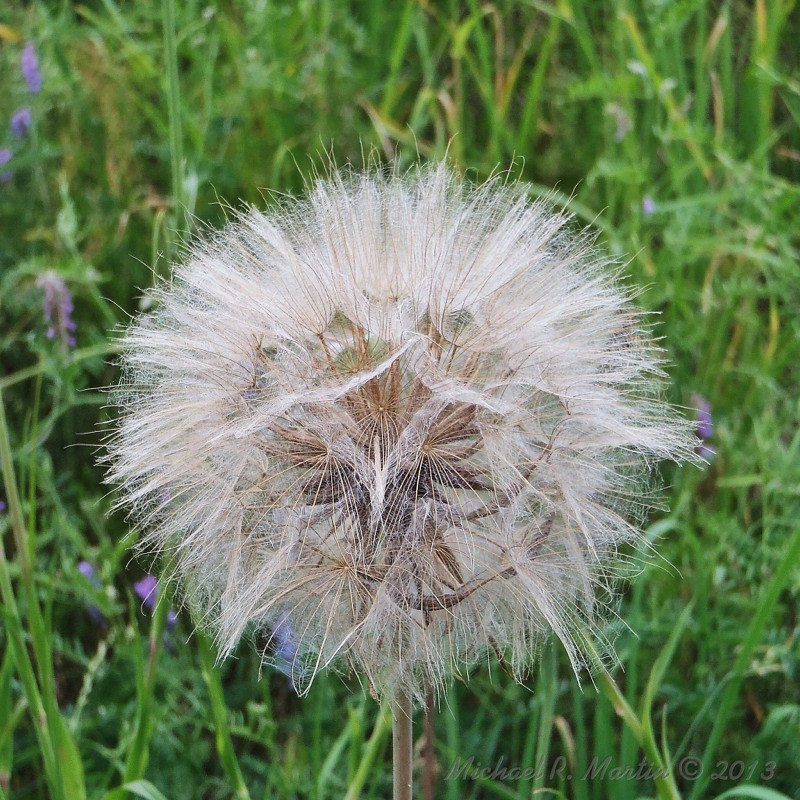
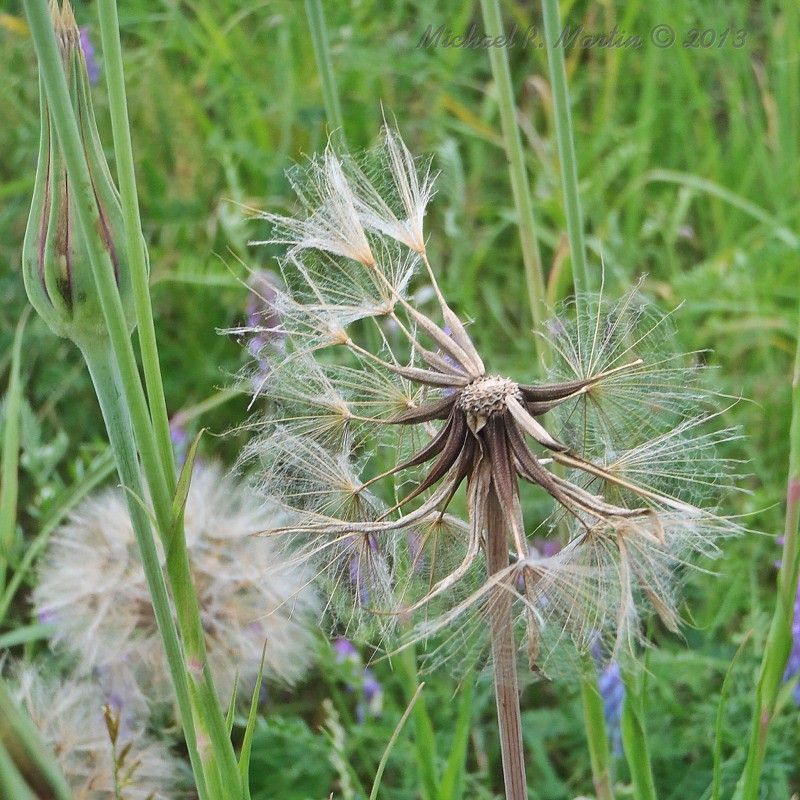
That weed is not a giant dandelion!
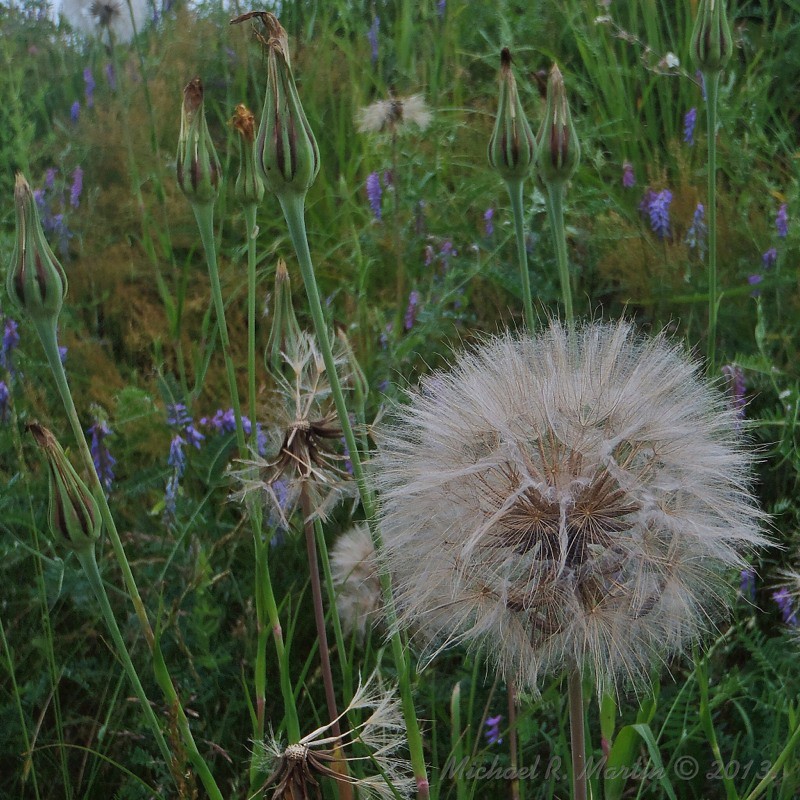
This summer I noticed what looked like a bunch of giant dandelion seed heads on the side of the field near our mail box. But it isn't a dandelion at all. What I was looking at we're the seed heads of Salsify or Goatsbeard. Tragopogon is a genus of flowering plants in the sunflower family (Asteraceae). Some species, such as the Purple Salsify (Tragopogon porrifolius) have edible taproots. The young shoots and leaves can also be eaten. According to Wikipedia, the taste of Purple Salsify root .is described as having the taste of oysters (hence the alternative common name "oyster plant" for some species in this genus), but more insipid with a touch of sweetness."
I'll have to keep a watch out next spring to see this plant in bloom so I can figure out what species we have growing along our roadside.
_______________________________________
Photos copyright Michael R. Martin
See http://en.wikipedia.org/wiki/Tragopogon for more information
The Crab Spider - expert camouflage but for what purpose?
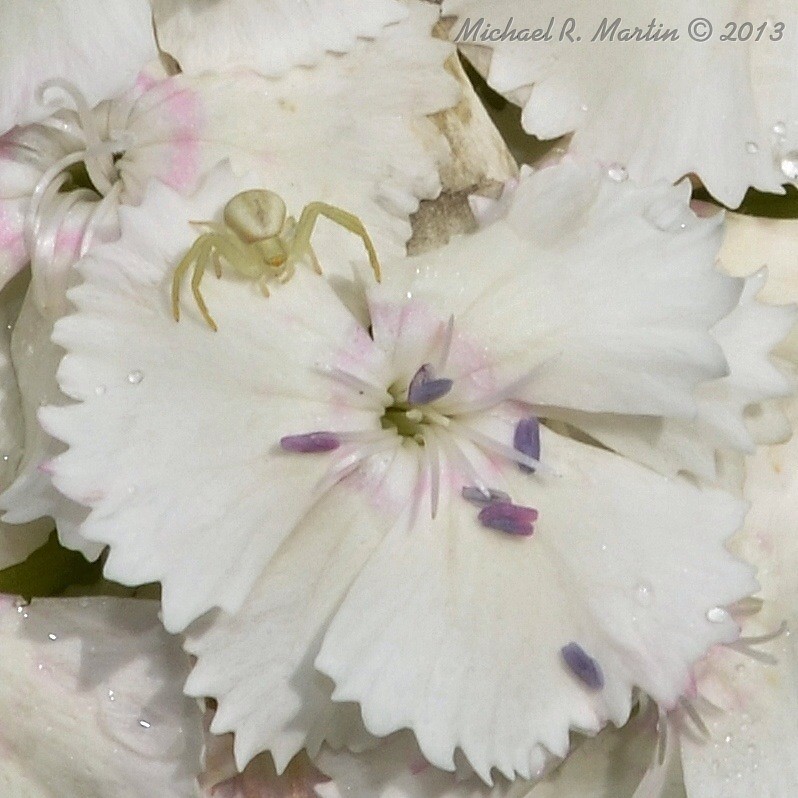
The female crab spider is a master of camouflage, with the ability to switch its color to match the flower on which it sits over a period of several days. The one we commonly see blending into flowers is of the genus Thomisus. Now scientists are wondering why they bother.
Science News (reported by Wired Magazine) reports that "Contrary to the textbook scenario, though, a white spider on a white flower doesn’t catch more prey than a white spider moved to a yellow flower, researchers report online November 3 in Proceedings of the Royal Society B.
Nor does a yellow spider on a yellow flower get a color-coordination bonus, says study coauthor Rolf Brechbühl of the University of Fribourg in Switzerland. He and his colleagues reached this conclusion after videotaping some 2,000 occasions when an insect buzzed over to a flower that held a spider. Sitting on a bloom ready to pounce on pollinators, the spider supposedly shifts to match her background by switching between white and yellow. To human eyes, she looks as if she’s becoming harder for her prey to see."
"Another possible direction — protection from the spider’s own predators — also doesn’t look encouraging in the new study. Brechbühl says that his research focused on spider prey, but he points out that all this videotaping took place in a field with plenty of birds and other possible menaces around. Even though he frequently moved spiders to flowers of the wrong color, he recorded only one predator (a bird) nabbing a spider."
So, once again, nature amazes and confounds us. But it sure is beautiful and wonderful.
________________________________________
Credits: Photo copyright Michael R. Martin
Article quotes: http://www.wired.com/wiredscience/2009/11/spider-color-changing-mystery/
Tuesday, July 02, 2013


Monday, June 24, 2013
New vintage instrument - 1928 Ludwig Kingston tenor banjo
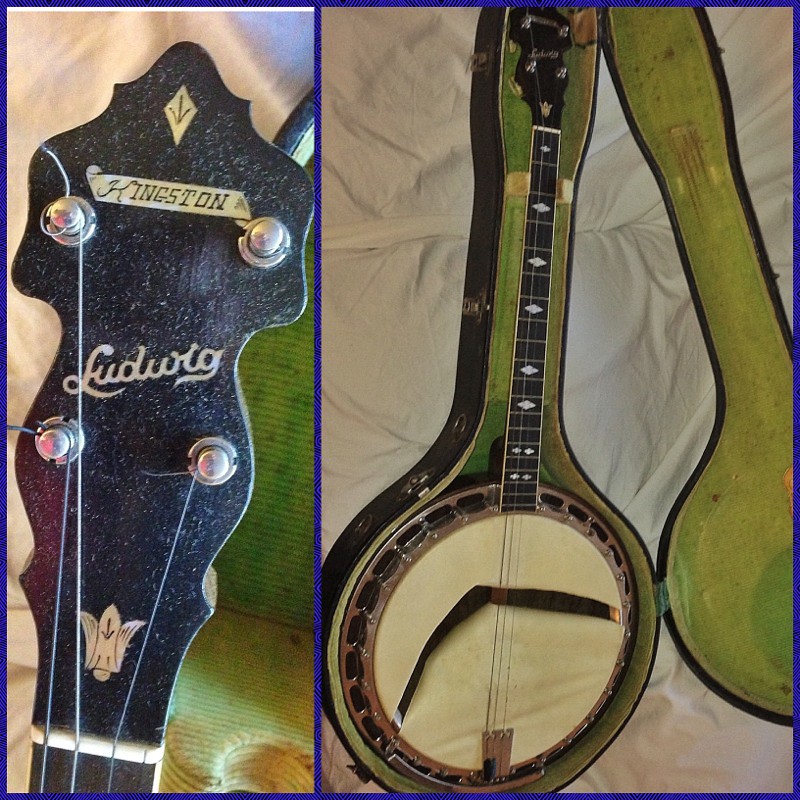

I'm told that this banjo was played in the Paul Whitman Band in the 1930s. If so, these are period images of this instrument.


Thursday, June 06, 2013
Cold, grey day
Dirty yellow on the southern horizon
Cold steel grey spread across the shallow sky
Trees, light green with new leaves of spring,
Sway in an arctic breeze
Only rain could make this dark day darker
Cold steel grey spread across the shallow sky
Trees, light green with new leaves of spring,
Sway in an arctic breeze
Only rain could make this dark day darker
Sunday, May 26, 2013
"Summer Fading . . . " A selection of songs from my upcoming album
Selection of my acoustic songs on upcoming album, "Summer Fading . . ."
Friday, May 17, 2013
Sanctuary: A positive meditation
Surround yourself with goodness
Be open to the pull of the universe
Let yourself be guided by currents that surround you
Yield to the forces of good in your life
Forces only felt when you focus on the goodness that surrounds you
We live within the currents of the universal
Goodness swirls around us, forming eddies in our lives Be open to the flow of the universal currents
Seek them, flow with them, follow them
Like dust that swirls within beams of sun
So our lives swirl within beams of universal love
______________________________
from "Soul Insights" by Michael R. Martin
Be open to the pull of the universe
Let yourself be guided by currents that surround you
Yield to the forces of good in your life
Forces only felt when you focus on the goodness that surrounds you
We live within the currents of the universal
Goodness swirls around us, forming eddies in our lives Be open to the flow of the universal currents
Seek them, flow with them, follow them
Like dust that swirls within beams of sun
So our lives swirl within beams of universal love
______________________________
from "Soul Insights" by Michael R. Martin
Searching - an excerpt from Soul Insights: Christians Bridging the New Age by Michael R. Martin
We are born whole, complete
From the moment we leave our mother's womb we spend the rest of our lives
searching for that wholeness, that oneness, complete God is always there, nurturing, guiding
Waiting for us to find him
This is God's prevenient grace watching over us
And though we can never find that completeness in this lifetime We can open our hearts to the One guiding spirit
And become more than we are,
With eyes focused beyond the mortal plane
______________________________________
Source: Soul Insights: Christians Bridging the New Age
From the moment we leave our mother's womb we spend the rest of our lives
searching for that wholeness, that oneness, complete God is always there, nurturing, guiding
Waiting for us to find him
This is God's prevenient grace watching over us
And though we can never find that completeness in this lifetime We can open our hearts to the One guiding spirit
And become more than we are,
With eyes focused beyond the mortal plane
______________________________________
Source: Soul Insights: Christians Bridging the New Age
Wednesday, May 15, 2013
Spring Peepers
At night, the strident call of Spring Peepers (Pseudacris crucifer), the ducklike clacking of Wood Frogs (Rana sylvatica), and the short trill of Grey Tree Frogs (Hyla versicolor), fill the air around every bog and wet place. Later in the summer, these tiny amphibians are sometimes found while walking in the woods and fields, mistakenly called baby frogs by the young children who can’t resist picking them up to show to their parents. At maturity, the tiny, brown Spring Peeper is just 3/4 - 1 1/4 inches in size. The nocturnal Spring Peeper is found in wooded areas in or near permanent or temporarily flooded ponds and swamps and hibernates under logs and loose bark. The Grey Tree Frog is 1 1/4 - 2 inches. The nocturnal Grey Tree Frog lives high in trees and descend only at night, usually just to chorus and to breed. The Wood Frog, brown with a bandit's mask of black behind its eyes, is only slightly larger at 1 3/8 - 2 3/4 inches. In the colder parts of its range, the Wood Frog is an explosive breeder. Swarms of pairs lay fertilized eggs within 1 or 2 days, then disappear into the surrounding country. It may venture far from water during summer, and hibernates in forest debris during winter. The Spring Peeper, a Chorus Frog, and the Grey Tree Frogs are members of the Tree Frog Family (Hylidae), while the Wood Frog is a member of the True Frog Family (Ranidae) and closely related to the familiar Leopard Frog.
______________________________________
Source: an excerpt from "A Few Summer Days in the Adirondacks:
A Natural History of the Adirondack Park" by Michael R. Martin
______________________________________
Source: an excerpt from "A Few Summer Days in the Adirondacks:
A Natural History of the Adirondack Park" by Michael R. Martin
Subscribe to:
Posts (Atom)